
Catalog: Stalroc Industrial
Browse heavy-duty drilling components engineered for extreme environments.

Cylinder
The cylinder, part 863 236 72, is the machined housing the piston strokes inside on a Montabert breaker, carrying both the bore the piston seals against and the porting that drives the percussion cycle. Scoring or wear in that bore is rarely caused by the cylinder itself; it is usually the result of contamination or a worn piston running against it, which is why the piston and its seals are worth checking whenever a cylinder is condemned. Because the bore is a precision surface rather than a structural wall, damage to it is a replacement decision rather than one a site can machine its way out of. Stalroc quotes this Montabert reference by part number and exports worldwide to mining, quarrying, and drilling contractors.
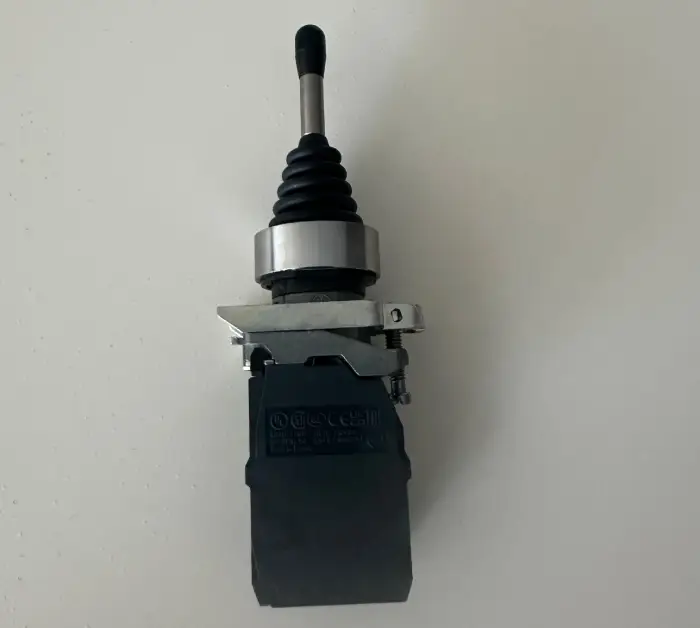
Control Manipulator
The control manipulator, part 851 196 09, translates the operator's lever input into the hydraulic signal that positions a Sandvik rig's boom or feed, sitting between the cab controls and the pilot circuit rather than switching the main hydraulic flow directly. Wear inside it shows up as reduced sensitivity or a dead band around neutral, which an experienced operator adjusts around long before it is reported as a fault. Because that drift is easy to compensate for from the seat, a worn manipulator often stays in service well past the point where it is affecting positioning accuracy and cycle times. Stalroc quotes this Sandvik reference by part number and exports worldwide to mining, quarrying, and drilling contractors.
Drifter Seal Kit
The drifter seal kit, part 3115 9170 91, bundles every seal a drifter needs for one full internal rebuild, sized and compounded to that specific drifter rather than assembled from a generic seal catalogue. Because a drifter runs high-frequency percussion cycles through most of its seals simultaneously, a kit built for a different drifter model can look like a fit on the bench and still under-perform once the machine is back in cyclic service. Buying the kit as a single reference also means the seals are matched to each other in compound and hardness, which individually sourced seals are not guaranteed to be. Stalroc supplies this Atlas Copco reference against its part number and exports worldwide to drilling contractors.
Needle Bearing
The needle bearing, part 0516 1538 00, carries radial load in a position where there is not enough room for a standard roller or ball bearing, packing more rolling elements into the same envelope to spread the load across a larger contact area. That density is also what makes it intolerant of contamination: a single piece of grit trapped between the needles marks every one of them on the next revolution rather than just the one it lodged against. Because of that sensitivity, a needle bearing removed from a contaminated housing is rarely worth reusing even if it still turns freely by hand. Stalroc quotes this Atlas Copco reference by part number and exports worldwide to mining, quarrying, and drilling contractors.
Circlip
The circlip, part 0335 2173 00, closes off one end of a bore to stop an internal component travelling further than its designed limit, working in tension rather than compression the way a snap ring on a shaft does. Fitting the wrong circlip in this position, even one that is only marginally undersized, lets the component it stops make repeated light contact with it on every cycle, which is what eventually throws it from the groove. Grooves themselves can wear from that repeated light contact, so a housing that has had a circlip pop out before is worth checking for groove wear rather than simply fitting another clip into it. Stalroc quotes this Atlas Copco reference by part number and exports worldwide to mining, quarrying, and drilling contractors.
Circlip
The circlip, part 0335 2169 00, retains a component axially inside its bore or on its shaft by seating into a machined groove, holding position without needing continuous clamping force the way a bolted joint does. A circlip that has lost its spring tension seats less firmly in the groove, and the play that introduces is often mistaken for wear in the component it is retaining rather than in the clip itself. Because it is inexpensive relative to what it holds in place, reusing a circlip through a rebuild to save a small cost is a poor trade against the part it is meant to protect. Stalroc quotes this Atlas Copco reference by part number and exports worldwide to mining, quarrying, and drilling contractors.
Driver
The driver, part 550 347 86, carries rotational drive between the rotation motor and the chuck inside a Sandvik rock drill, sitting in a chain where every joint's backlash adds to the next one's. A driver with worn splines does not slip outright; it hammers on every direction change instead, and that hammering is what damages the mating components around it rather than the driver in isolation. Because it works as part of a chain rather than alone, it is usually renewed alongside the components it drives during a rotation unit overhaul rather than replaced by itself. Stalroc quotes this Sandvik reference by part number and exports worldwide to mining, quarrying, and drilling contractors.
Bushing
The bushing, part 550 350 50, locates the piston centrally in the cylinder bore of a Sandvik hydraulic rock drill, and its job is concentricity rather than load-bearing in the way a rotation bushing works. Once it wears unevenly, the piston starts striking slightly off-axis, and the resulting side load shows up as accelerated wear on the piston and bore rather than on the bushing that actually caused it. Because the fault presents as bore or piston wear, this bushing is easy to overlook during diagnosis unless it is checked directly. Stalroc quotes this Sandvik reference by part number and exports worldwide to mining, quarrying, and drilling contractors.
Bushing
The bushing, part 550 063 74, carries the rotating shaft inside the rotation unit of a Sandvik rock drill, taking the sliding wear onto a replaceable sleeve instead of onto the housing bore it sits in. That is the entire economics of the part: it is designed to be the cheaper, faster item to renew, and the arrangement only pays off if it is changed before its clearance opens up. Once a bushing like this is run past its limit, the load it was absorbing transfers into the housing itself, which is a considerably more expensive and slower repair. Stalroc quotes this Sandvik reference by part number and exports worldwide to mining, quarrying, and drilling contractors.
Bushing
The bushing, part 550 350 52, sits between two moving assemblies inside a Sandvik rock drill and is sized to a close working clearance with the shaft it supports, close enough that a slightly undersized replacement binds and a slightly oversized one introduces play immediately. That tight tolerance is why a visually similar bushing from a different position in the same drill is rarely a safe substitute. Measuring the clearance against the shaft it fits, rather than assuming a like-for-like swap, is the reliable way to confirm the reference before a rebuild goes back together. Stalroc quotes this Sandvik reference by part number and exports worldwide to mining, quarrying, and drilling contractors.
Bushing
The bushing, part 550 350 49, is the smaller of the sleeve bearings fitted along this section of a Sandvik rock drill, supporting a reduced-diameter section of shaft where the surrounding components leave little room for a larger bearing surface. Its smaller area means unit loading is higher for the same duty, which is why it tends to reach its wear limit sooner than the larger bushings around it. A drill that has been apart before is worth checking here even if the larger bushings nearby still measure within tolerance, since this is often the first of the set to need renewal. Stalroc quotes this Sandvik reference by part number and exports worldwide to mining, quarrying, and drilling contractors.
Distributor
The distributor, part 551 194 08, times the flow that drives percussion in a Sandvik rock drill, opening and closing internal passages in a fixed sequence so the piston is driven and returned on schedule. Wear here does not stop the drill; it shifts the timing slightly, and a percussion mechanism running even marginally out of time loses stroke energy long before anyone traces the cause back to this component. Because the symptom reads as reduced penetration rather than as a distributor fault, it is often the last component checked rather than the first, even though it is one of the more common causes. Stalroc quotes this Sandvik reference by part number and exports worldwide to mining, quarrying, and drilling contractors.