
Catalog: Stalroc Industrial
Browse heavy-duty drilling components engineered for extreme environments.

Sliding Piece
The sliding piece, part 3222 3153 44, runs against a mating surface under controlled friction as part of a linkage or guide mechanism, and its bearing material is matched precisely to that surface. A substitute that fits dimensionally but uses a different material can wear itself away faster than intended, or worse, wear away the more expensive surface it runs against. Wear usually shows up first as play or roughness in the mechanism rather than as visible damage on the piece itself, and contamination at the sliding interface accelerates it considerably. Because the part sits inside a larger assembly, checking it during scheduled service catches wear before it propagates. Stalroc quotes this Atlas Copco reference by part number and exports worldwide to mining, quarrying, and construction contractors.
Touch Panel
The touch panel, part 3222 9890 28, is the operator interface through which control commands and diagnostic information pass on Atlas Copco equipment. Unlike a mechanical wear part, its failure modes are electrical: a degraded touch layer, a dimming display, or moisture ingress past an aged seal. Because the panel is the single point through which the operator monitors the machine, a fault here has an outsized effect on productivity and safety, sometimes hiding fault codes or interlocks an operator would otherwise see. It is worth confirming power supply and wiring before assuming the panel itself has failed, since a replaced panel will not fix an upstream fault. Stalroc quotes this Atlas Copco reference by part number and exports worldwide to mining, quarrying, and construction contractors.
Pressure Gauge
The pressure gauge, part 3177 3032 00, reads system pressure directly on Atlas Copco equipment, and the decisions made about operating the machine depend on the accuracy of that reading. A gauge rarely fails by going obviously blank; it more often drifts quietly out of calibration while still looking entirely normal to the operator reading it. A gauge reading a false pressure is arguably more dangerous than one that has visibly failed, since a visible failure at least prompts attention. Mechanical shock from an unprotected mounting is a common and avoidable cause of premature gauge failure. Stalroc quotes this Atlas Copco reference by part number and exports worldwide to mining, quarrying, and construction contractors.
Flange
The flange, part 2653 2679 44, joins two sections of a housing or assembly at a bolted interface rather than a permanent joint, so it can be opened for inspection or component replacement. Flatness and surface finish at the mating face determine how well the joint seals or aligns, and a small distortion can compromise both while the flange still looks structurally sound. Uneven bolt clamping is a common cause of gasket failures that look, on the surface, like a sealing material problem. Renewing the gasket alongside the flange, rather than reusing one that has already been compressed, avoids repeating the same fault after reassembly. Stalroc quotes this Atlas Copco reference by part number and exports worldwide to mining, quarrying, and construction contractors.
Chuck Driver
The chuck driver connects the piston's percussive energy to the tool bushing and, through it, to the chisel working the rock or concrete face. On the Furukawa HD715, part HD71502025 sits at the lower end of the housing, so every impact the breaker delivers passes through it before reaching the tool. Excessive internal clearance lets the tool wander with each blow, showing up first as uneven shank wear and later as vibration through the boom. Because the driver takes the harshest combination of impact and contamination on the machine, it is worth checking during scheduled tool changes rather than waiting for a symptom severe enough to notice during normal operation. Many workshops replace it alongside the front and rear bush as a wear group, since running one worn component against fresh neighbours usually just shortens everyone's service life. Stalroc quotes this Furukawa reference by part number and exports worldwide to quarrying, mining, and demolition contractors.
Piston Bushing
The piston bushing, part HD71201528, guides the reciprocating piston inside the cylinder bore of the Furukawa HD712 breaker, keeping it centred and sealed through thousands of strikes per hour. Excess clearance lets the piston run off-axis, and the resulting internal bypass reduces blow energy even though the hydraulic circuit upstream is performing normally, a common diagnostic trap. Because the bushing sits inside the cylinder, replacing it means a proper strip-down, which makes it a component best assessed during scheduled major service rather than reactively. Most workshops use that access to check piston condition and the seal kit at the same time, since a seal that fails shortly afterward will simply recontaminate a brand new bushing. Stalroc quotes this Furukawa reference by part number and exports worldwide to mining, quarrying, and demolition contractors.
Bush Front
The front bush, part HD71502202, sits at the lower end of the HD715 housing where it guides and supports the tool shank closest to the working face, absorbing the side loads generated whenever a tool is worked at an angle rather than straight down. Of the tool guidance group it typically wears fastest, being the most exposed to dust and debris. A worn front bush lets the tool move laterally, and that play transmits upward into the chuck driver and housing bore, both far more costly to repair than the bush itself. Most workshops replace the front and rear bush together rather than singly, since the two wear at similar rates supporting the same shank. Stalroc quotes this Furukawa reference by part number and exports worldwide to quarrying, demolition, and mining contractors.
Stabilizer Kit
The stabilizer kit, part Bg00646593, keeps a Sandvik drilling attachment steady and correctly aligned as it works, and is supplied as a kit because its pads, pins, and bushings function as a coordinated set. Replacing one worn element while leaving the others in place rarely restores the stability the assembly is meant to provide. Without adequate stabilization, side loading from uneven ground translates into lateral movement that accelerates wear on bearings and seals well beyond the stabilizer itself, so wear here has an outsized effect on the rest of the drill string. Ground conditions vary the replacement interval considerably from site to site. Stalroc quotes this Sandvik reference by part number and exports worldwide to mining, quarrying, and drilling contractors.
Idler Wheel
The idler wheel, part 322 278 48, supports and guides a moving belt or track chain without driving it, riding on an internal bearing that usually determines its actual service life more than the wheel's outer surface does. A wheel that no longer rotates freely converts rolling contact back into sliding contact at the point it touches. That single fault can meaningfully shorten the life of the far more expensive track chain or belt running over it, which is why a relatively cheap idler wheel is worth checking by hand rather than leaving in service on the strength of a quick visual look. Stalroc quotes this Sandvik reference by part number and exports worldwide to mining, quarrying, and construction contractors.
Wear Piece
The wear piece, part 550 163 84, is a sacrificial component fitted to take abrasive wear that would otherwise fall on the more expensive structure behind it. A wear piece worn down to the point where it no longer fully covers the area it protects has, at that point, stopped doing its job even though it remains physically in place. Wear rate depends heavily on the material being processed and the specific mounting point, which is why many operations track remaining thickness at scheduled inspection rather than relying on a fixed calendar interval. Stalroc quotes this Sandvik reference by part number and exports worldwide to mining, quarrying, and construction contractors.
Gear Drive
The gear drive, part HD71502007, belongs to the HD715 breaker's rotation mechanism rather than the direct percussion path, converting rotary input into controlled movement of the tool holder. Wear here tends to show up as backlash first, a small amount of play a technician can feel by hand before it becomes visible as tooth wear. Because this component supports rotation rather than the strike itself, symptoms can be subtler than a failing chuck driver: rotation feeling rougher, or the tool holder not sitting quite where expected. Catching it at the backlash stage keeps the job a straightforward parts swap; run past that point and the fault risks damaging the mating gear and housing bore as well. Stalroc quotes this Furukawa reference by part number and exports worldwide to quarrying, demolition, and mining contractors running HD715 breakers.
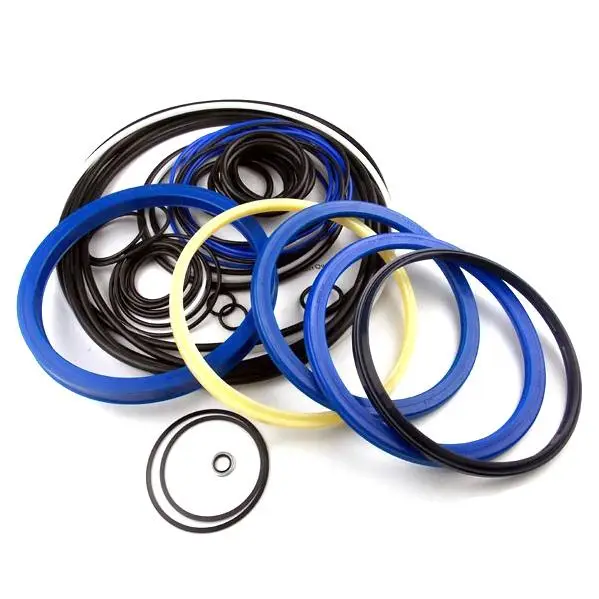
Seal Kit
A seal kit brings together the sealing elements an assembly needs for a rebuild, supplied as a matched set so the job can be completed without discovering a missing item partway through. Seals are consumable by design and are renewed whenever a hydraulic assembly is opened, regardless of how the removed ones look. The common error is fitting new seals into a bore or onto a rod that is already scored, which returns the leak within a fraction of the expected interval. Assessing those surfaces before the kit goes in is what makes fitting it worthwhile. Because kits are specific to the assembly and its generation, ordering against the manufacturer reference avoids a set that does not match. Stalroc quotes this Furukawa reference by part number and exports worldwide to drilling contractors.